
base.php
by Wassila Abboud, spring 2024
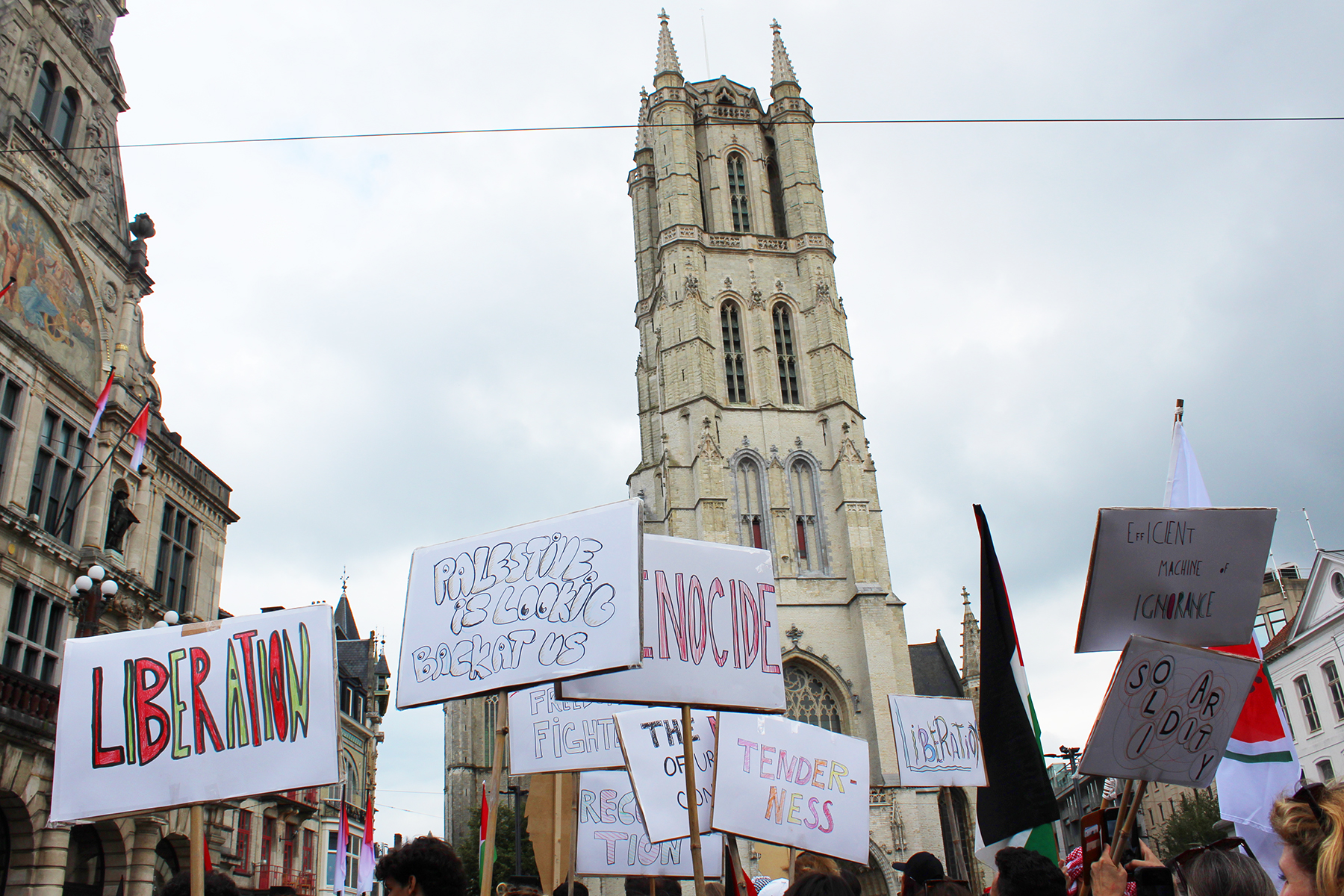
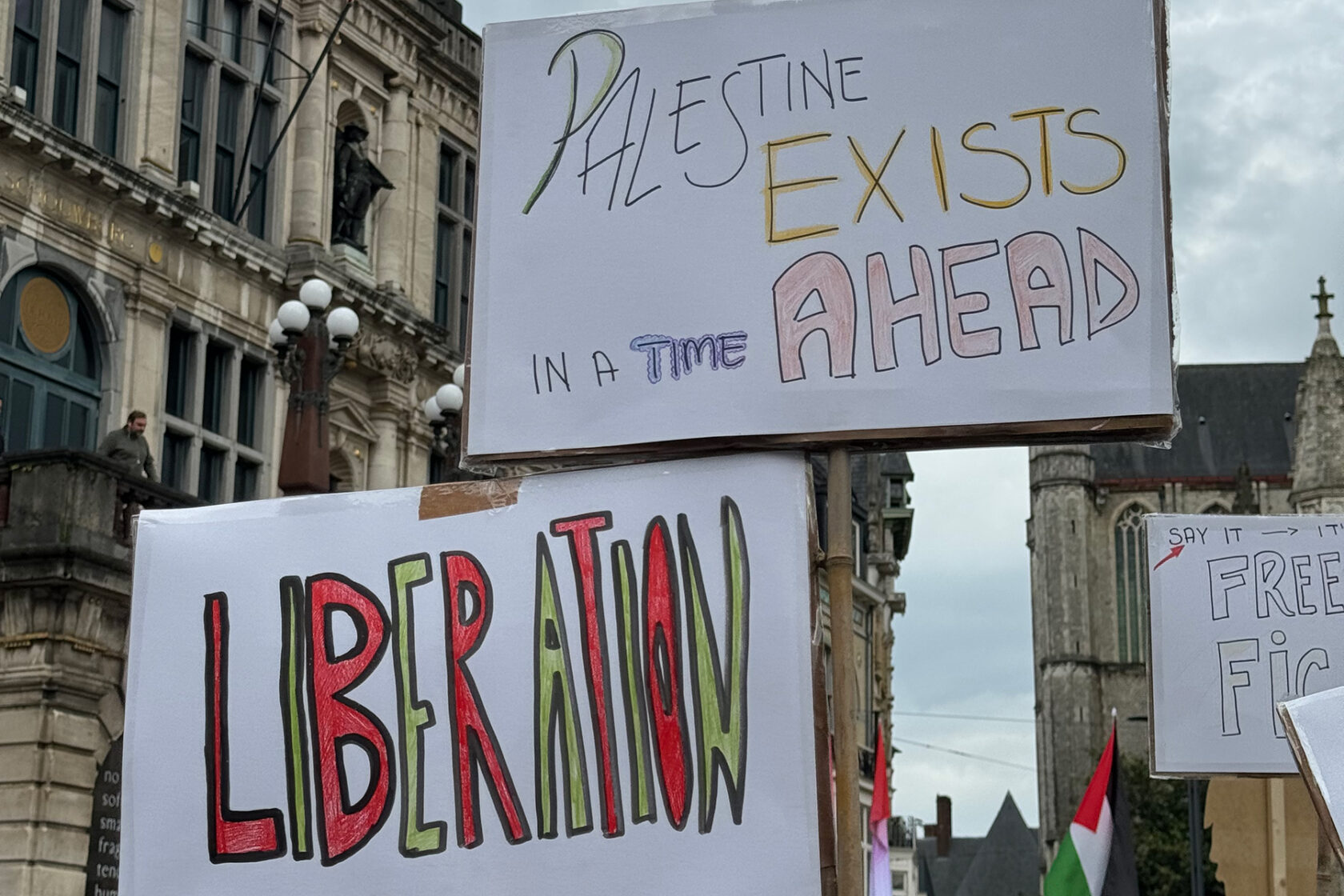
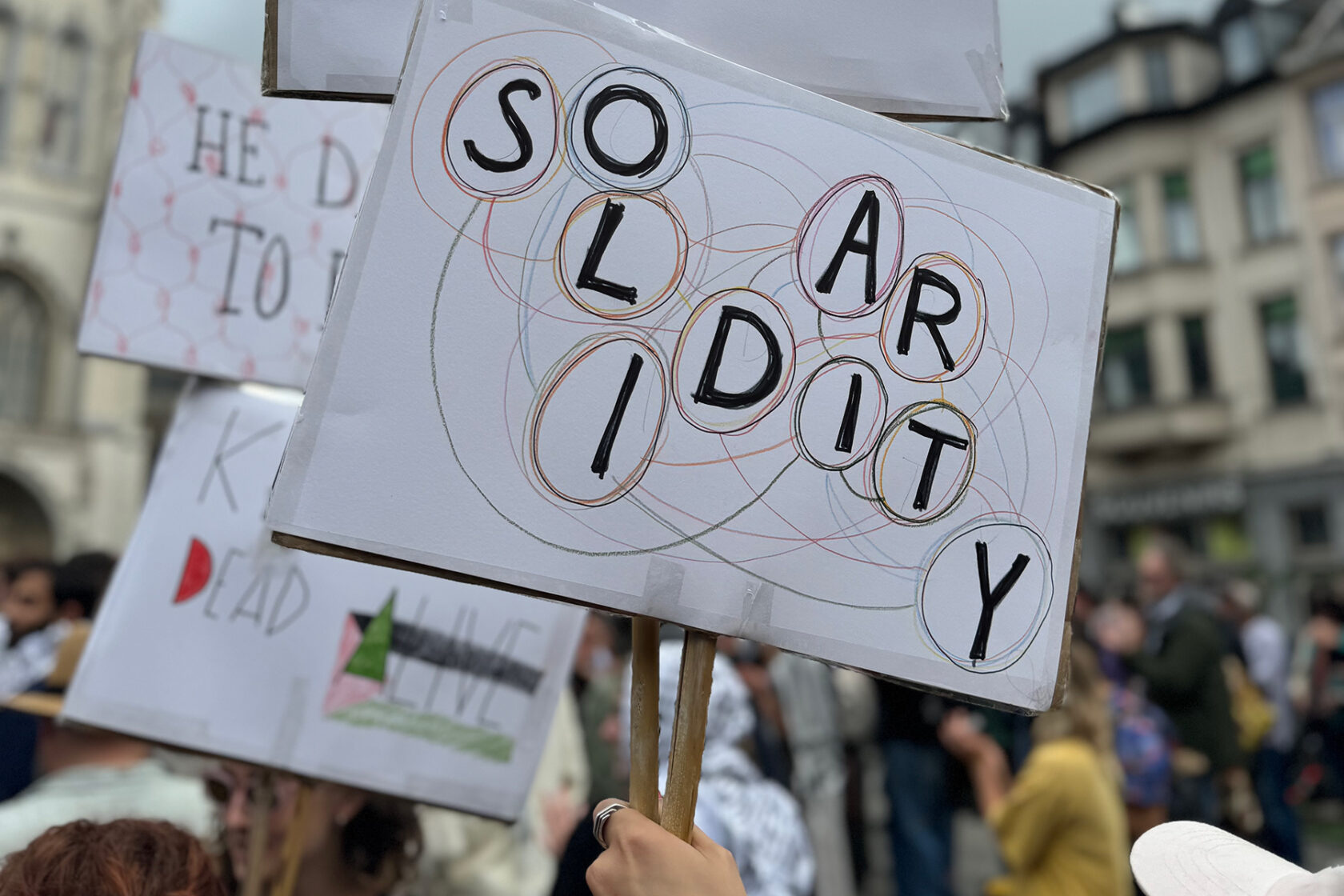
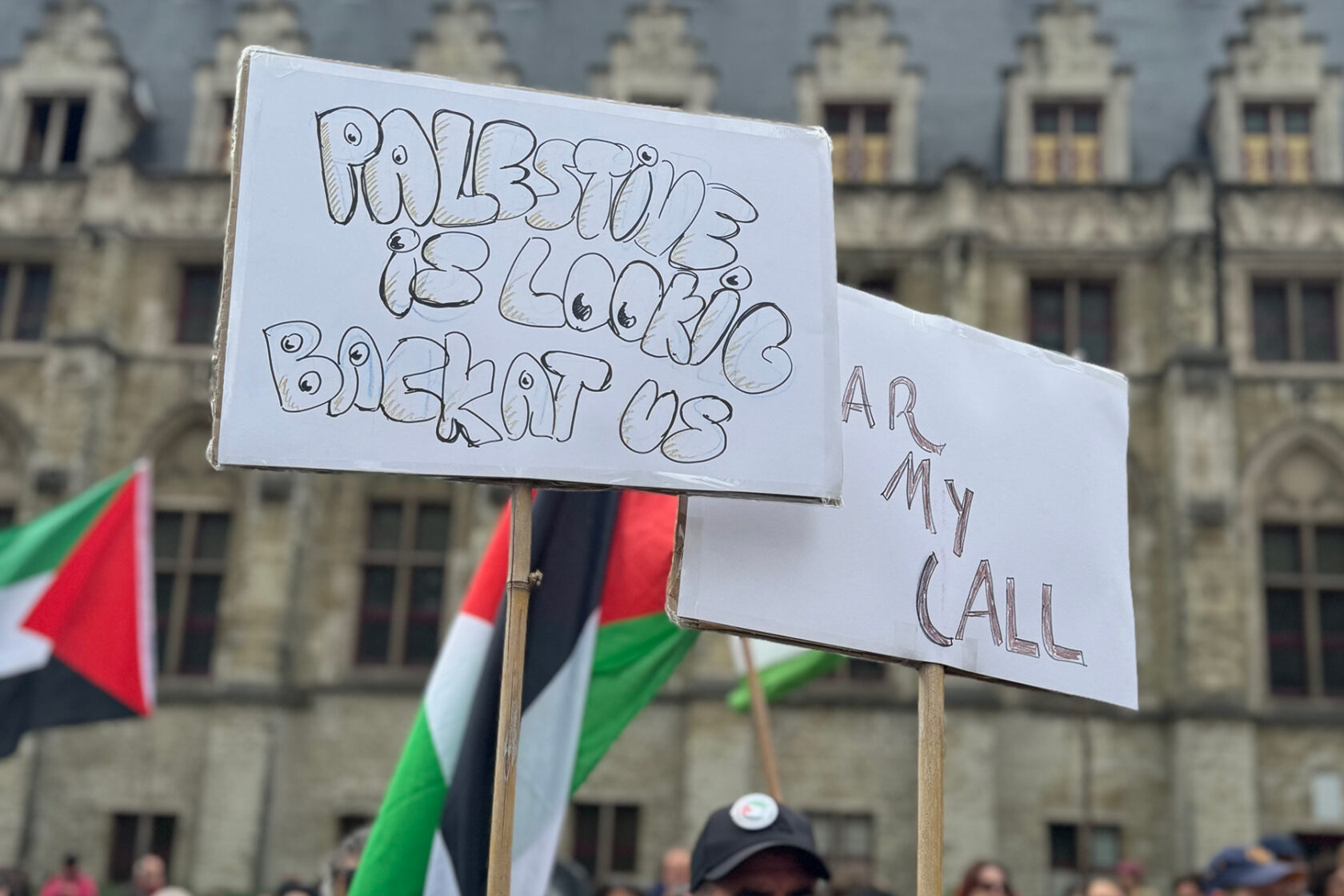
Whose words do we use to capture our collective undefeated despair, the magnitude of loss and the conditions of subtle and obvious structural violence? Whose stories do we seek to shape our understanding of what it means to remain ‘sumud’? When we choose words, what impact do they hold within Western institutions? The same institutions who themselves perfect a formula between a calculated language that appropriates revolutionary aesthetic, disguising deeply rooted Zionist values. We observe institutional language which theorizes Palestine, done in a way which reproduces a static temporality of enduring violence. The same voices who by doing this, obfuscate the past and colonize the future, bypassing any material present. When we chant the words of our most revolutionary, our martyrs, our mothers of martyrs and our political prisoners, a contradiction is sharpened; the world isn’t positioned to look at Palestine, Palestine is existing in a time ahead of the world. Palestine is looking back at us.
In the interest of not intellectualising suffering, I have used the following anecdotes, experiences and observations that look at the structure of freedom of speech as a virus. One that dictates how far we can go, a virus that seeks to bypass tyrannical firewalls yet alters itself between a dominant culture and a dominated one. Reflecting the same stress, it detects the multiple structures of violence and its authenticity is tested in the confusion of recognition. This is the dilemma of the dominated. To be wiped out or to alter, at the price of their continuity.
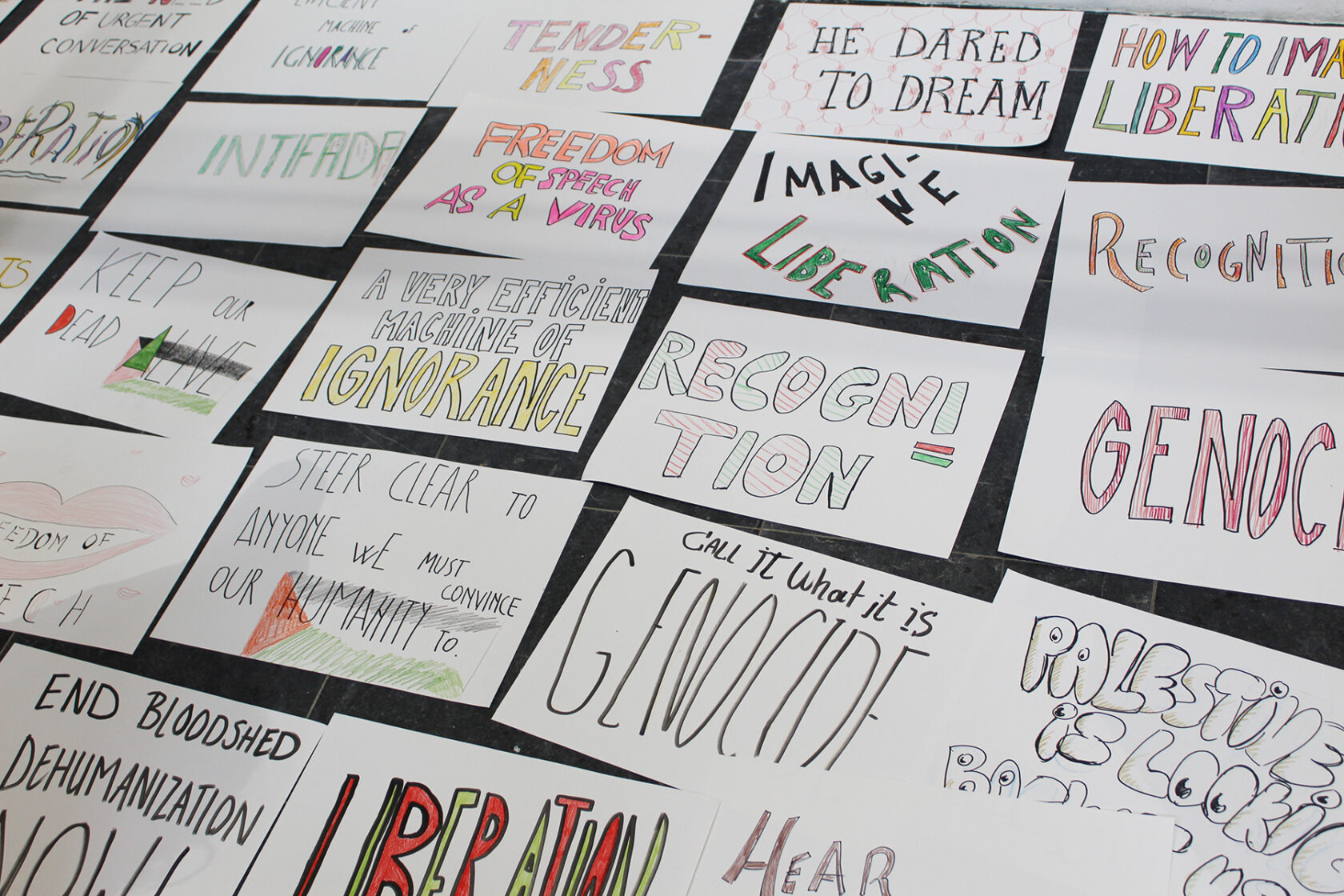
I called my grandmother Wassila recently, an unpublished writer and poet with a handful of unconcealed books written on her birthplace. I was telling Wassila about the incessant urgency within the arts to pressure institutions to release statements declaring their ongoing solidarity with Palestinians. Always the epic, never the documentary, her advice was direct and simple – she urged me to steer clear of anyone we must convince our humanity to.
“They don’t work to protect us, or represent us” she responded in Arabic.
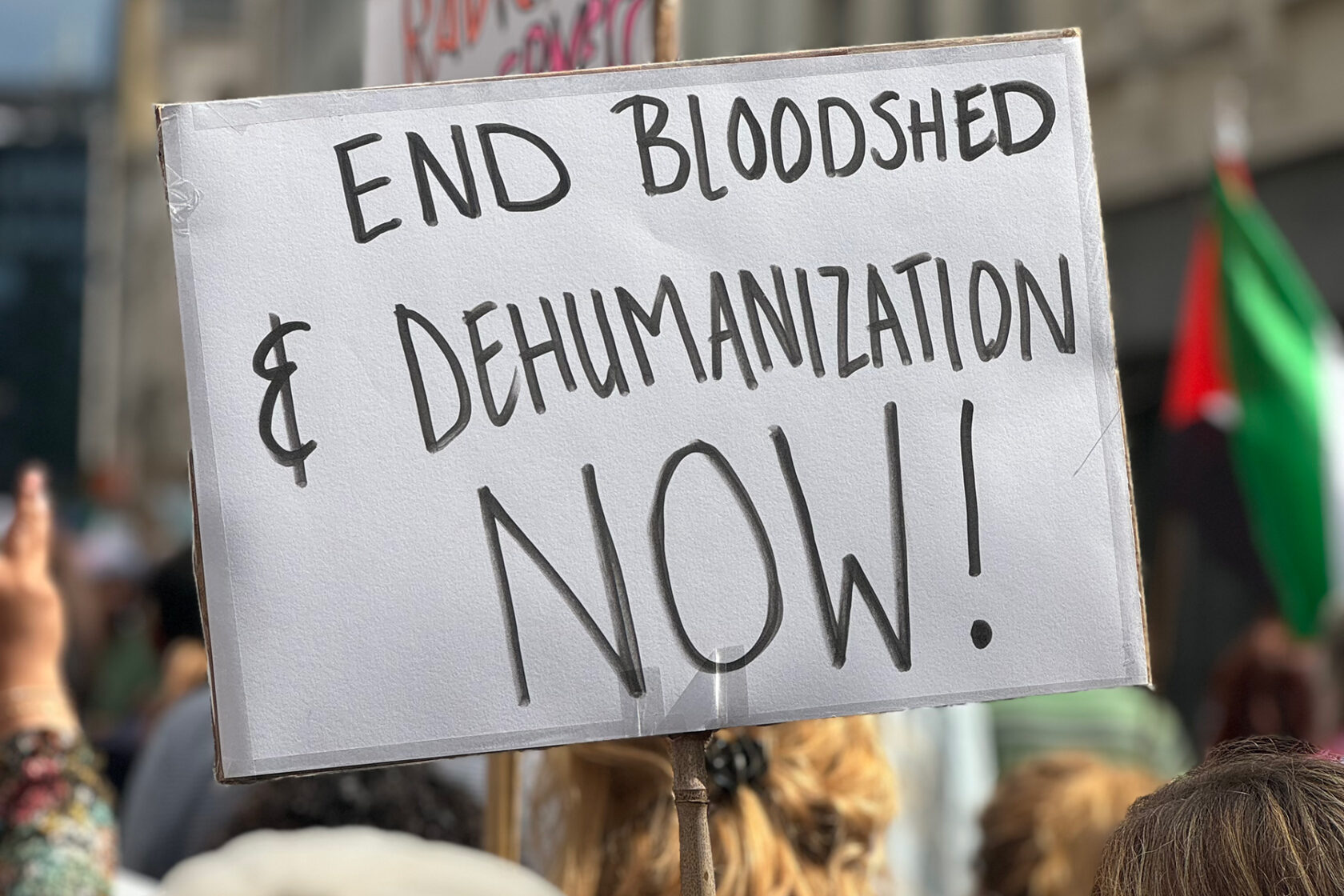
As I write this, the occupation has today dropped leaflets over Rafah, warning those whose lives have been spared so far to evacuate the area, most people of which have been forced to evacuate for the fourth time. The death toll is now over 40,000, with thousands more expected to be buried under the rubble. Rubble on rubble is material evidence that the Nakba is an ongoing structure of settler-colonial violence in its most vicious genocidal phase. It will take us years to conjure the scope of loss, whereby barbarism has revealed itself as the face of a capitalist crisis, a system in crises that can only reproduce through bloodshed, dehumanization and extermination.
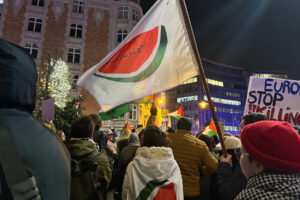
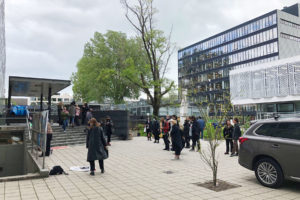
On the 8th November in Amsterdam, following the opening of International Documentary Film Festival Amsterdam, the organisation released a statement declaring that ‘From The River To The Sea’ is anti semitic after protesters interrupted the opening night. The statement continued to explain that ‘The slogan in question does not represent who we are, and we do not endorse it in any way. We sincerely apologize that this was hurtful to many.” A sick joke? Mohammad El Kurd so eloquently responds to such statements with the same level of absurdity, which only further reveals a projection of the zionist’s unhappy conscience. An unhappy conscience which secretes a very efficient machine of ignorance, ignorance of self and other, for the initial duality inherent to the unhappy conscience is reversed. So, put simply, Zionists don’t know who Palestinians are, effectively erasing them, and thereby also don’t know who they are in relation to themselves. In the words of Abdelkebir Khatibi “by expropriating Palestinians, the Zionist relieves his conscience by offering it his sin and his misfortune.”
Zionists have had the luxury of experimenting with their unhappy conscience through a mythical aura around the creation of their state. “The colonist makes history,” Frantz Fanon wrote, “his life is an epic, an odyssey.” The response from many After IDFA’s statement, the knee-jerk reaction from many filmmakers and their wider audience was reduced to the genre of documentary, where we saw many using language intended to convince, explain, make palatable the meaning of ‘From The River To The Sea’.
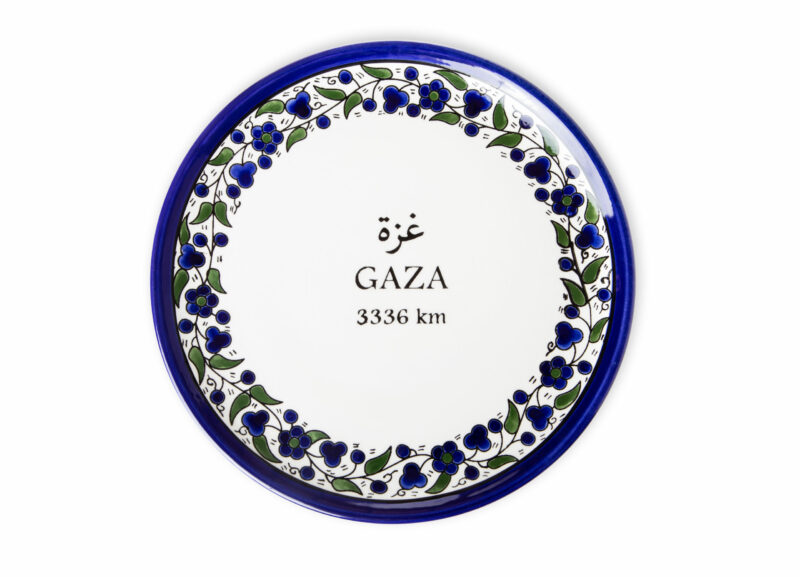
The colonisers will always attempt to make the colonised legible, a regime dictating words, a rubble of words. A language in a chokehold by the genre of documentary goes beyond erasure and actively occupies and deforms archives to inject the other narrative with the same images. Gaza in the West, for instance, is often described as “an open-air prison”, a term which invokes a formula for controlling the virus while not eradicating it or spreading it. A formula that pontificates an image of the perfect victim while developing a calculated amount of antibodies that maintain the status quo. Amongst Arabs, Gaza is colloquially referred to as al-ard al-moharrarah, the freed land, the liberated land (الارض المحررة).
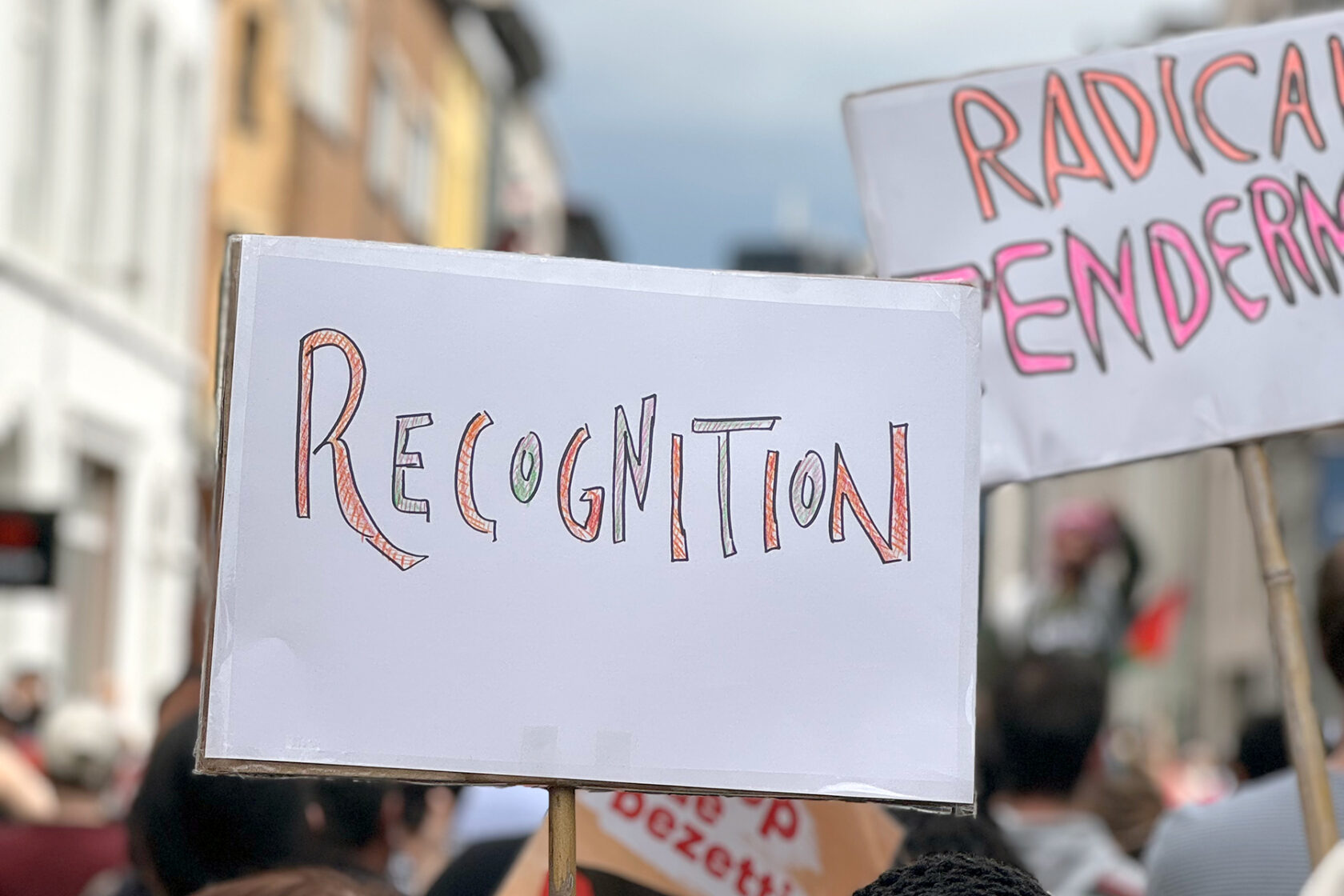
The contradiction is sharpened, yet it doesn’t quite give birth to something new. It makes us realise that freedom of speech must be recognised within the structure that either allows or censors speech. But this comes after that same structure decides what is speech and what isn’t. The manipulation of an image or words, and censorship at its most material, is a mechanism used by the freedom-of-speech structure to maintain its power, and as Islam al Khatib explained in her recent article ‘Becoming Monsters’, the imposed battle over language has gone beyond propaganda and has become a battle over what type of Palestinian agency is palatable, with the very meaning of words being altered and denied. Put simply, our words are never going to be received in the way they’re intended.
In 1968, three young men used to enter a forest every morning and emerge in the evening. They saluted Talal, the Lebanese poet, as he sipped his coffee on the balcony every morning and evening. One morning, the men never showed. In April 1974. Talal Haidar came across the news that three freedom fighters were martyred during an operation in the nearby Israeli settlement of Kiryat Shmouna in the former colonised Palestinian/Lebanese Saalihiyyat. Talal recognized the three men from the pictures, the men who used to salute him every day, morning and evening.
“Alone, they remain, like the elderflower
Alone they are, collecting the leaves of time.
They lock the forest,
And like the rain, they knock on my door.
Oh, time, like grass scattered over these walls.
You lit up the roses of night on my book.
The pigeon castle is fortified and high.
The pigeons left, And I remained alone, oh alone.
Oh, you, waiting for the snow, don’t you want to return?
Shout for them in the rain, oh wolf, perhaps they would hear my call.
Alone, they remain like this old cloud.
Alone, their faces and the darkness of the road cross the forest
and with their hands, like the rain, knock on my door.
This poem was later produced into the song ‘Wahdon’ by composer and playwright Ziad Rahbani twenty years after it was written. Before his work with the communist party, Ziad worked behind the scenes and on a volunteer basis with the PFLP, composing many songs for the front.
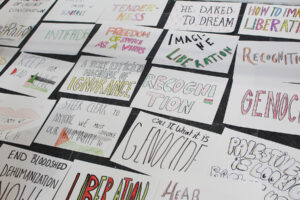
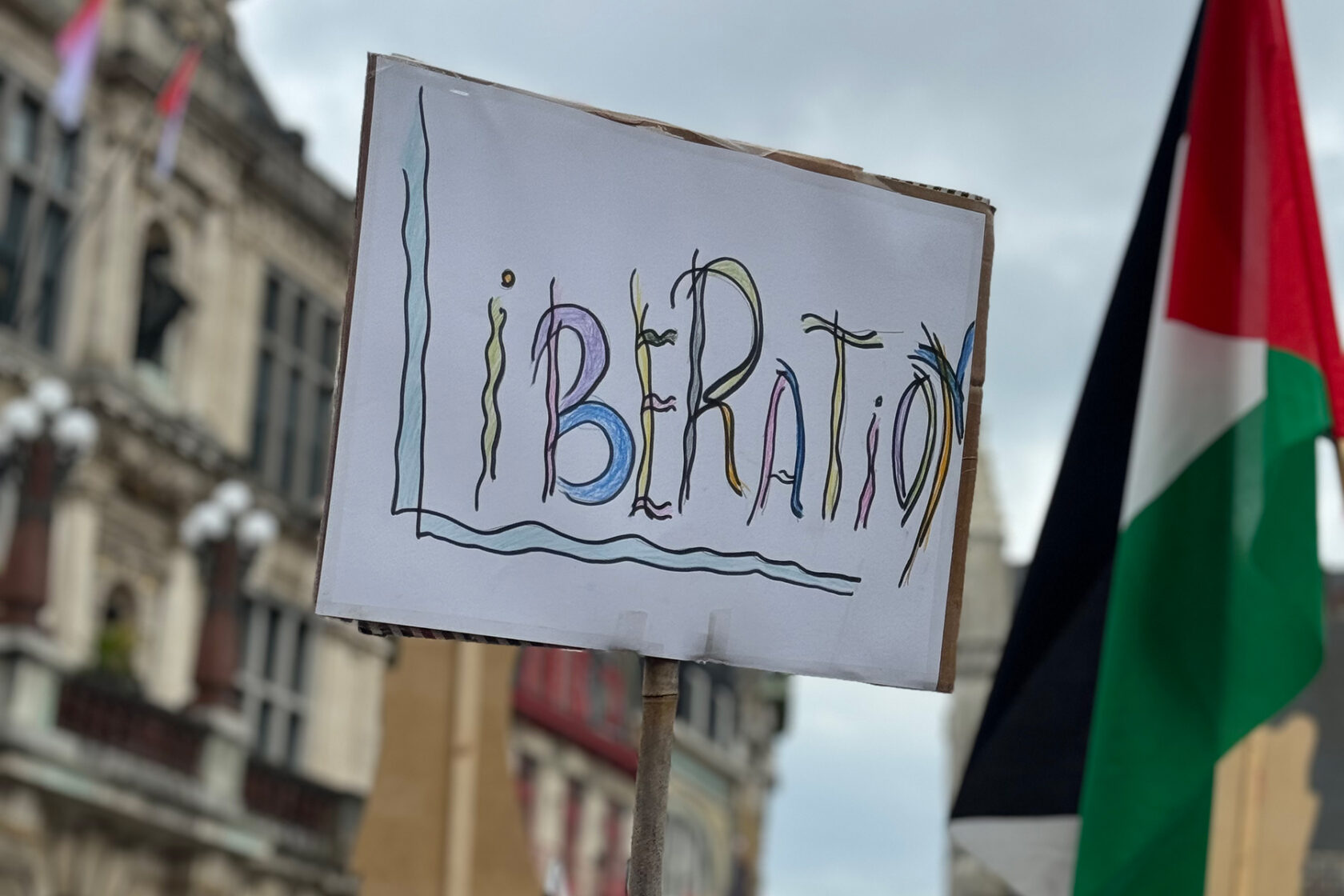
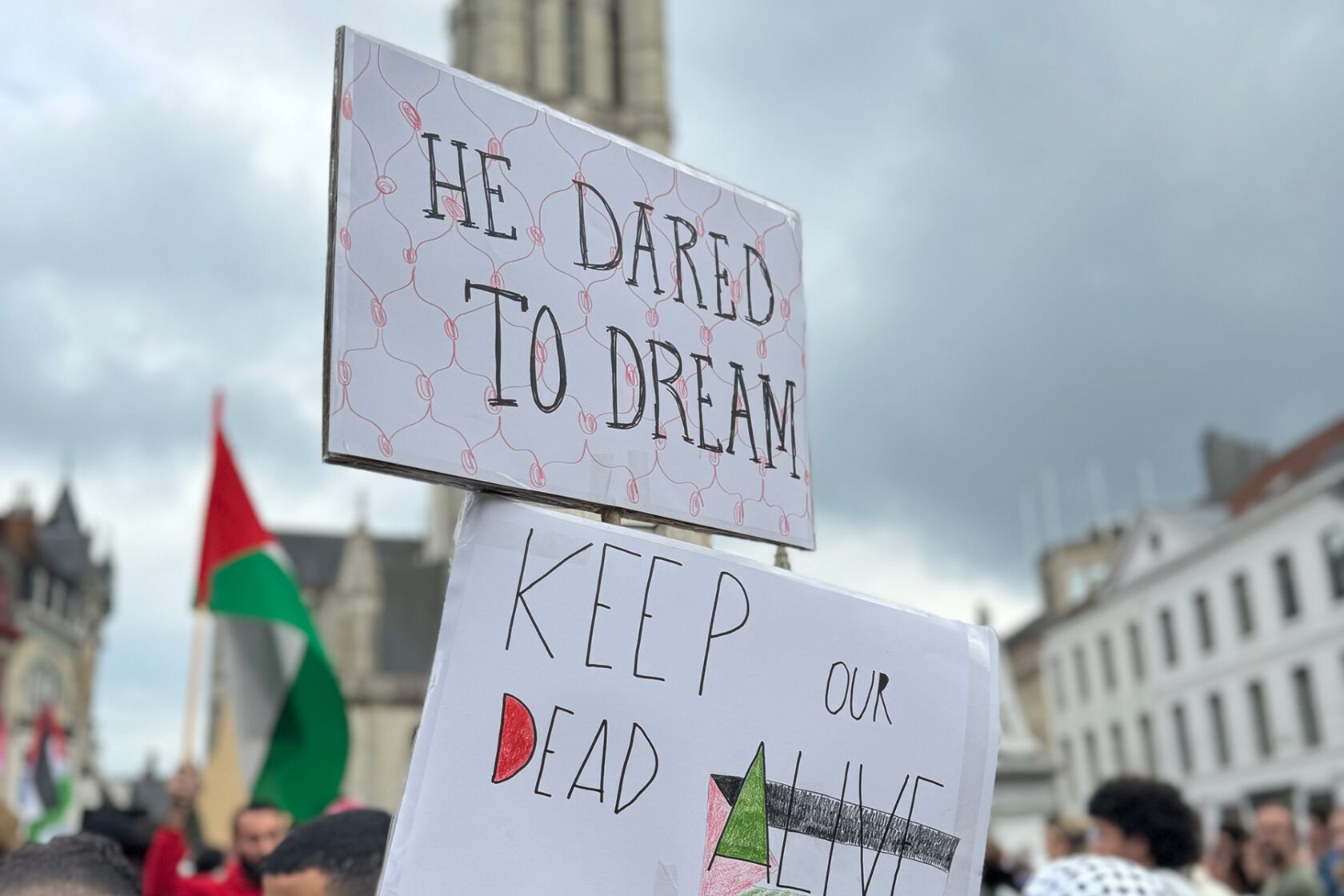
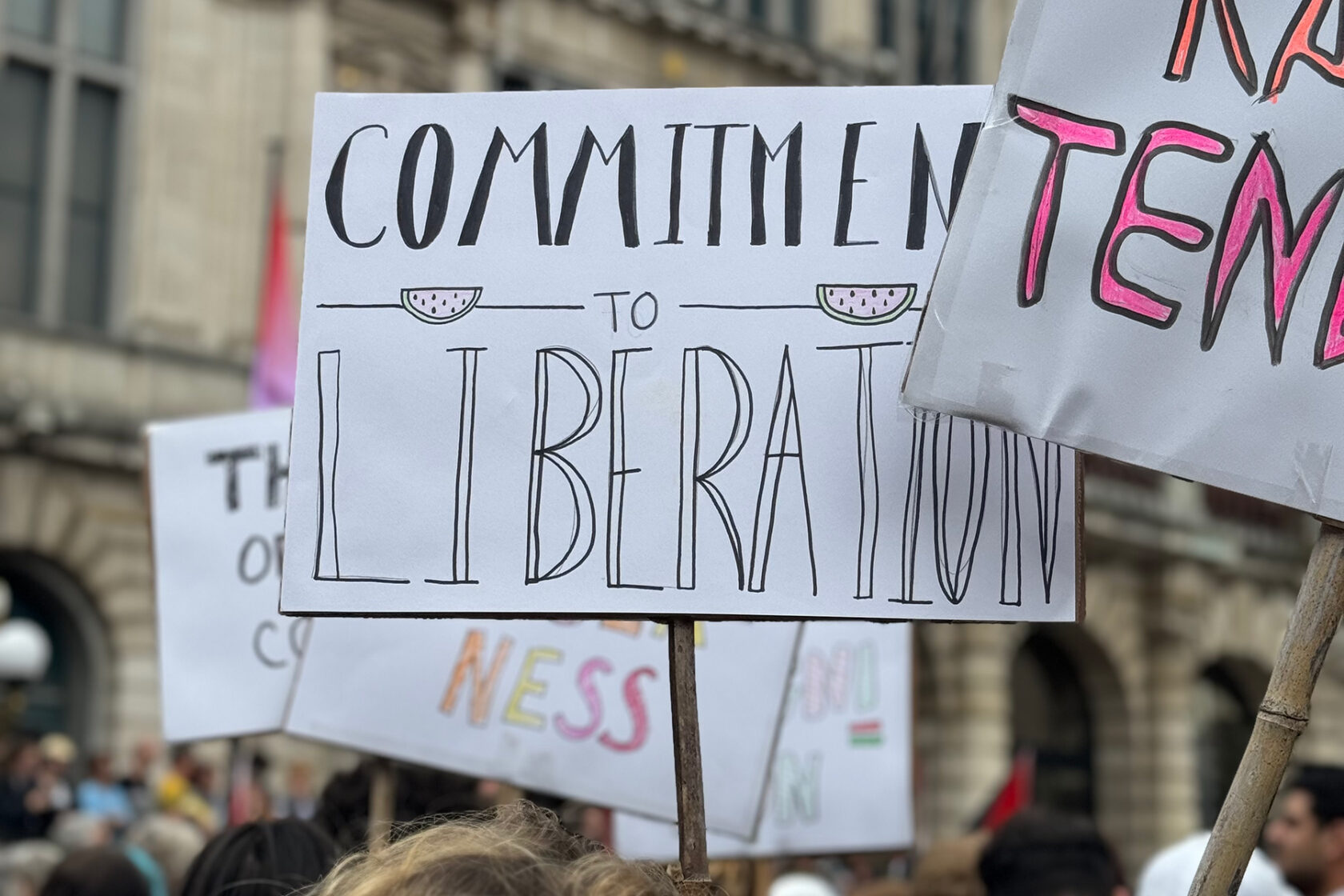
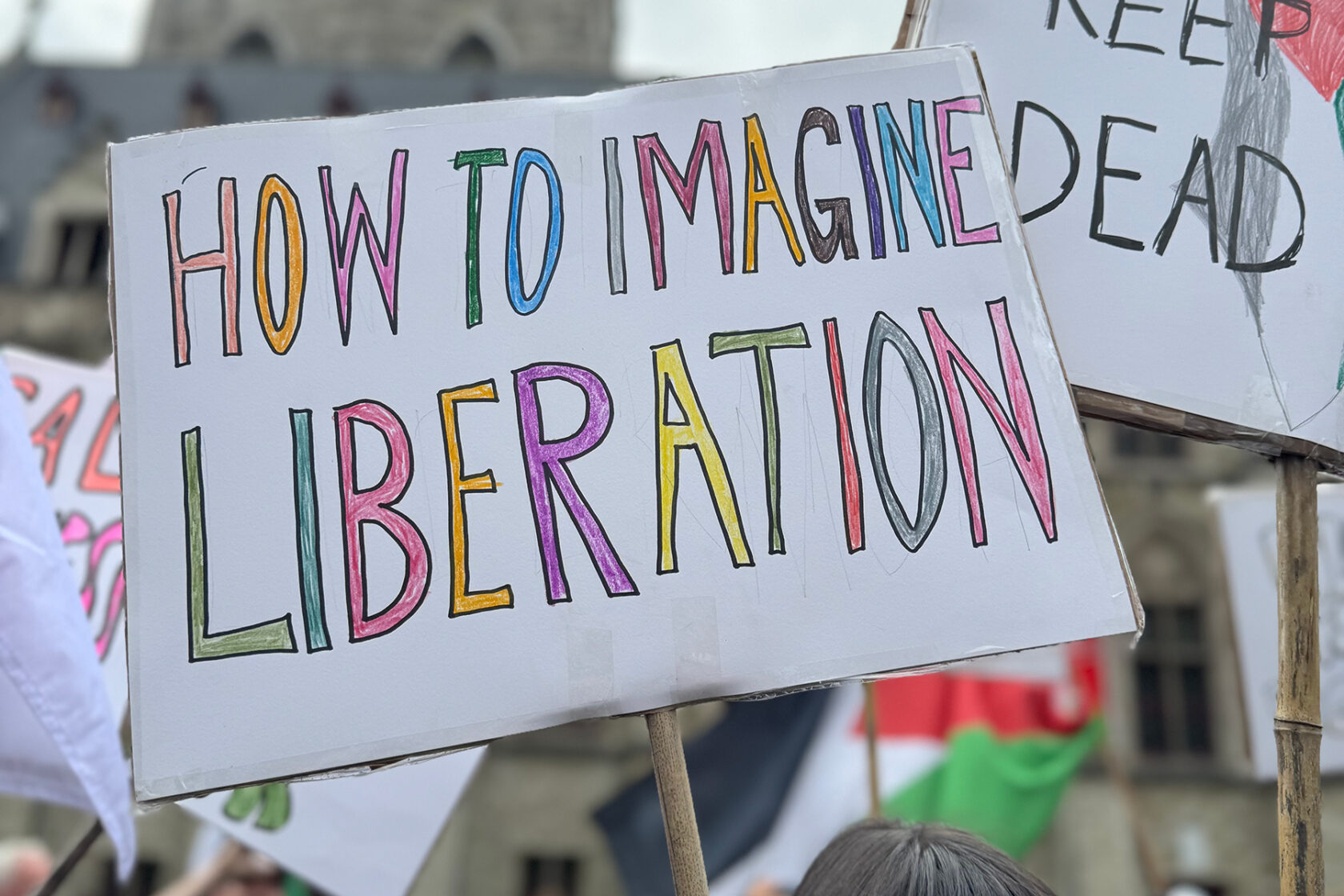
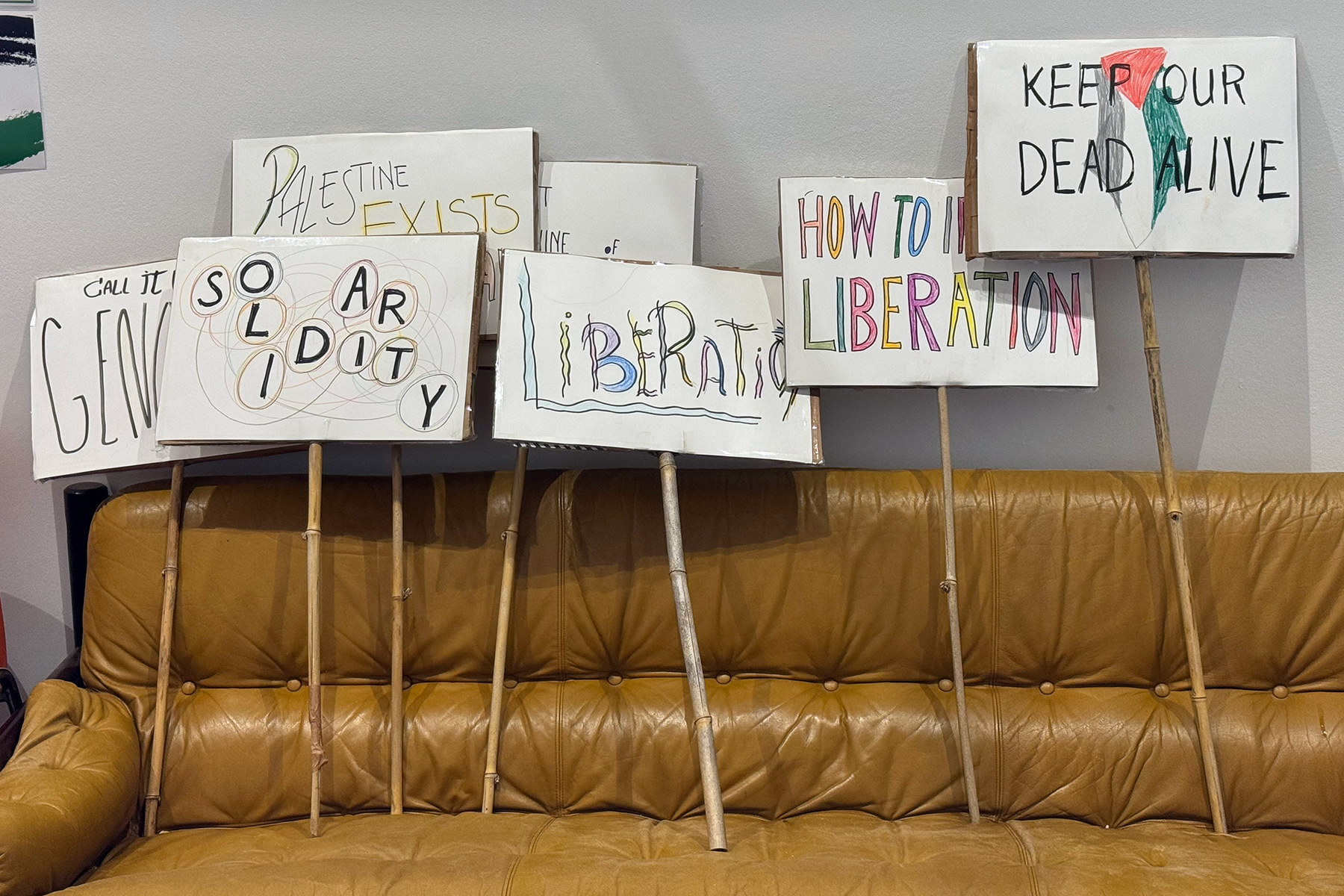
To imagine liberation, we must look to the people who dared to dream about it. To manoeuvre ourselves out of Western frameworks and build infrastructures of our own, infrastructures which go beyond any rational description because insofar, our rational words have allowed the death of over forty thousand Palestinians. The framework for these new infrastructures must not lead to dead metaphors but instead work to keep our dead alive, words that have the power to shatter the contradictions that force us into abstractions. The only way this foundation can be built is by looking to those at the forefront of our liberation struggle: our political prisoners and our martyrs.
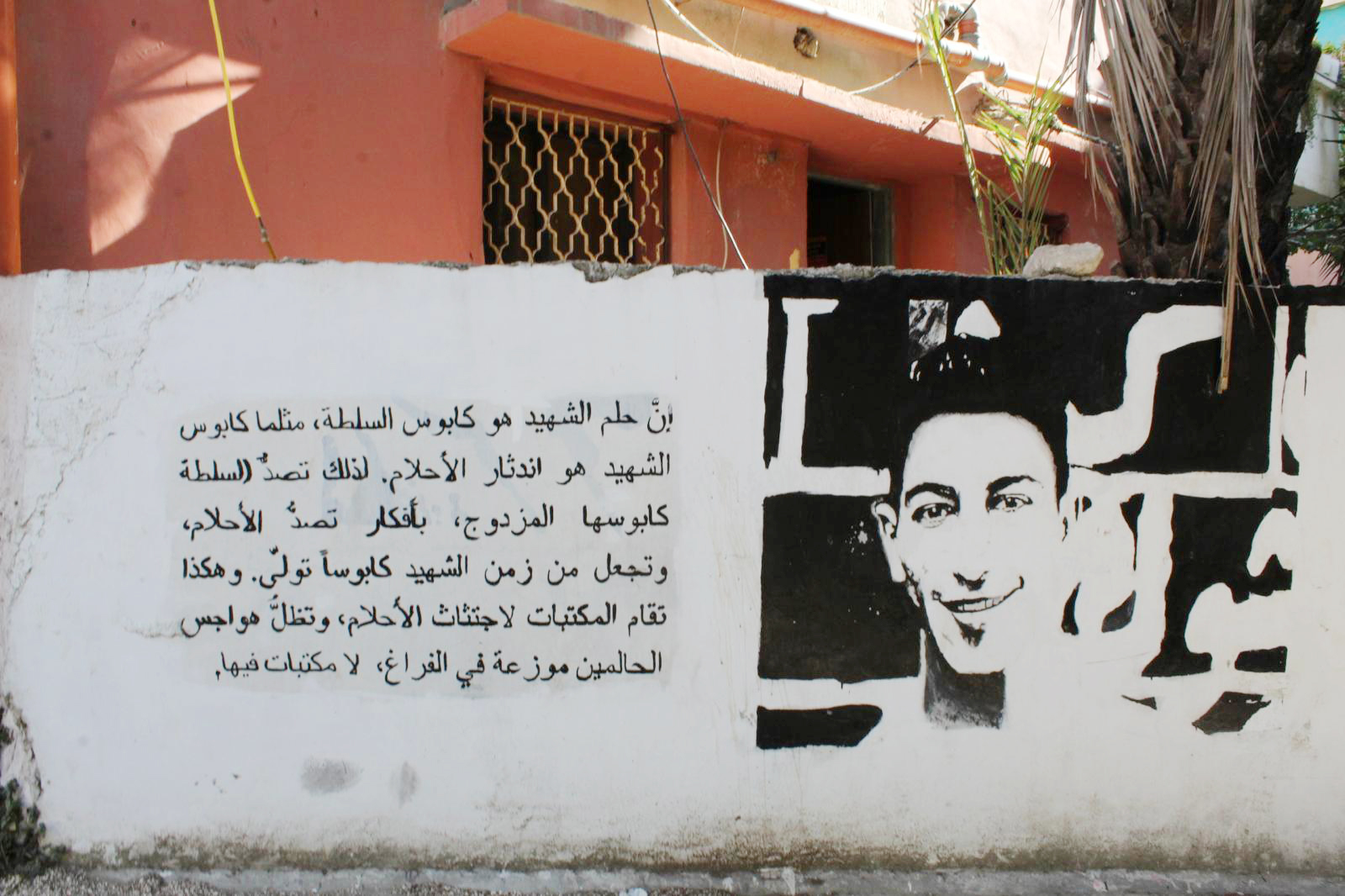
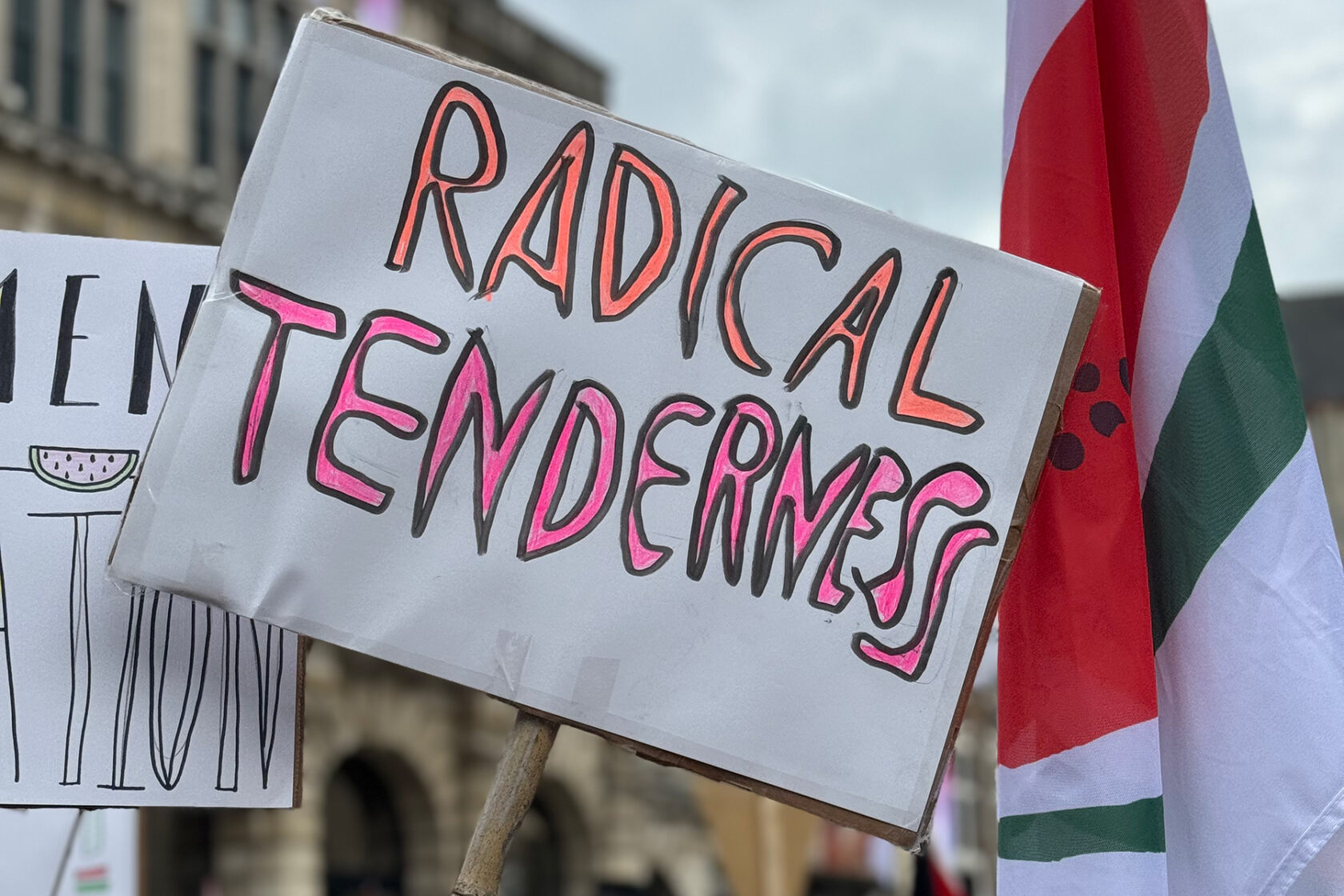
Bassel Al Araj was assassinated in 2017 at the age of 31 because he dared to dream. Found in the location he was assassinated, after his six-month hiding, was a handful of possessions, including books by Antonio Gramsci and Mahdi Amel, along with a stack of his own unpublished writings. With tenderness, I Have Found My Answers: Thus Spoke the Martyr Bassel al-Araj was a collection of texts sharing his absolute commitment to liberation and, as translator Bassem Saad explains, “ a supple, even ecumenical ideological approach.” These words sit deeply in the hearts of those who share the same clarity, a shared stance of undefeated despair, which no post-modern or political vocabulary can find a word for.
We look to the ‘motorrad’, the prisoners and those in camps, who shape the meaning of words like ‘sumud’, ‘martyr’ and ‘liberation’. The assassination of Bassel al-Araj in 2017 and the many writings he left, is one brick added to a city built by martyrs, the dreamers who refuse to kneel. The dreamers whose words exist outside words.

The dream of the martyr is the nightmare of the authority, just as the nightmare of the martyr is the extinction of dreams, so the authority repels its double nightmare, with ideas that repel dreams, and turns the time of the martyr into a nightmare. Thus, libraries are established to eradicate dreams, and the dreamers’ obsessions remain distributed in the void, with no libraries in them.
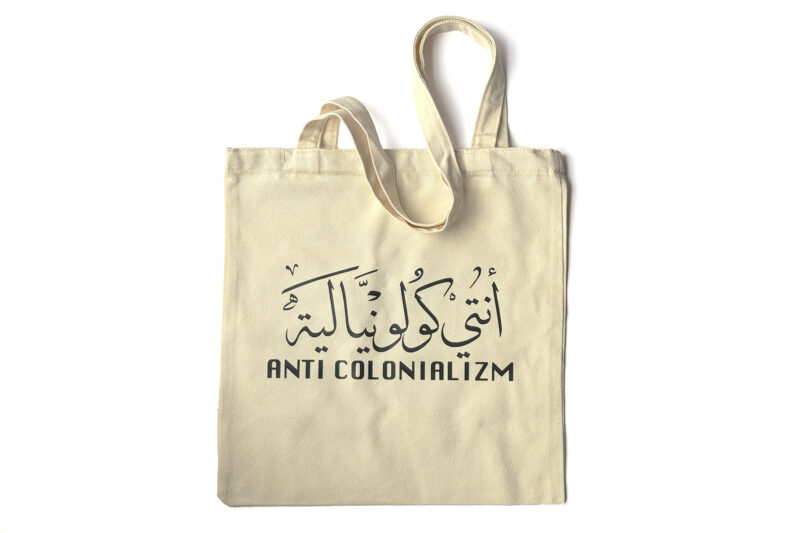
There is no real direct translation for “decolonization” in Arabic, instead, tahrir and taharrur, both words for “liberation.” The Lebanese Marxist and revolutionary Mahdi Amel criticised the term “decolonization” used by other writers, including Jacques Berque or Frantz Fanon, and instead used future-oriented language in his work. The title of his opus, Theoretical Prolegomena to the Study of the Impact of Socialist Thought on the National Liberation Movement, emphasised the importance of national liberation movements born from anti-colonial struggles and context. He argues such movements are the major force in global history after World War II, in that the socialist revolution cannot be obtained in the West or anywhere else without the success of the national liberation project in the ‘Global South’. For Amel, Bassel Al Araj, and many alike, anticolonial liberation is the precondition for any truly transformative future, which is why he committed his life to fighting for it, in theory and practice.